28 October 2026
Rental Yield vs. Capital Appreciation Part One: What the Two Numbers Actually Mean
Part one of a two-part article.
“A property can put money in your pocket today, or it can become significantly more valuable tomorrow. The real question is: how do you know which opportunity is worth your money?”
Imagine investing ₦300 million in a property. One year later, it has generated millions in rental income. Another property, purchased for the same amount, has attracted less rental income but increased considerably in market value.
Which investor made the better decision?
Truth? The answer isn’t as straightforward as you might think.
Reason? When it comes to real estate, the purchase price is only one part of the story. What matters is what your money can do after you’ve bought the property, the income it can generate, the value it could build over time, and the costs and risks that come with owning it.
And yet, it’s easy to get caught up in the excitement of a beautiful development, an impressive location or a promise of attractive returns without fully understanding how the numbers work.
One important question every investor must ask themselves even before they start looking:
Am I buying this property for the income it can generate, or for how much it could be worth in the future?
That’s why two concepts deserve your attention before you make your next property investment: rental yield and capital appreciation.
One helps you understand the income your property could generate, while the other helps you assess how its value might grow over time. Both can contribute to wealth creation, but they serve different purposes. Understanding the difference could change how you evaluate your next investment.
Let’s break it down.
First, What Exactly Is Rental Yield?
Think of rental yield as the income your property generates relative to what you paid for it.
In simple terms, it helps you answer this question: How much rent am I earning on the money I’ve invested in this property?
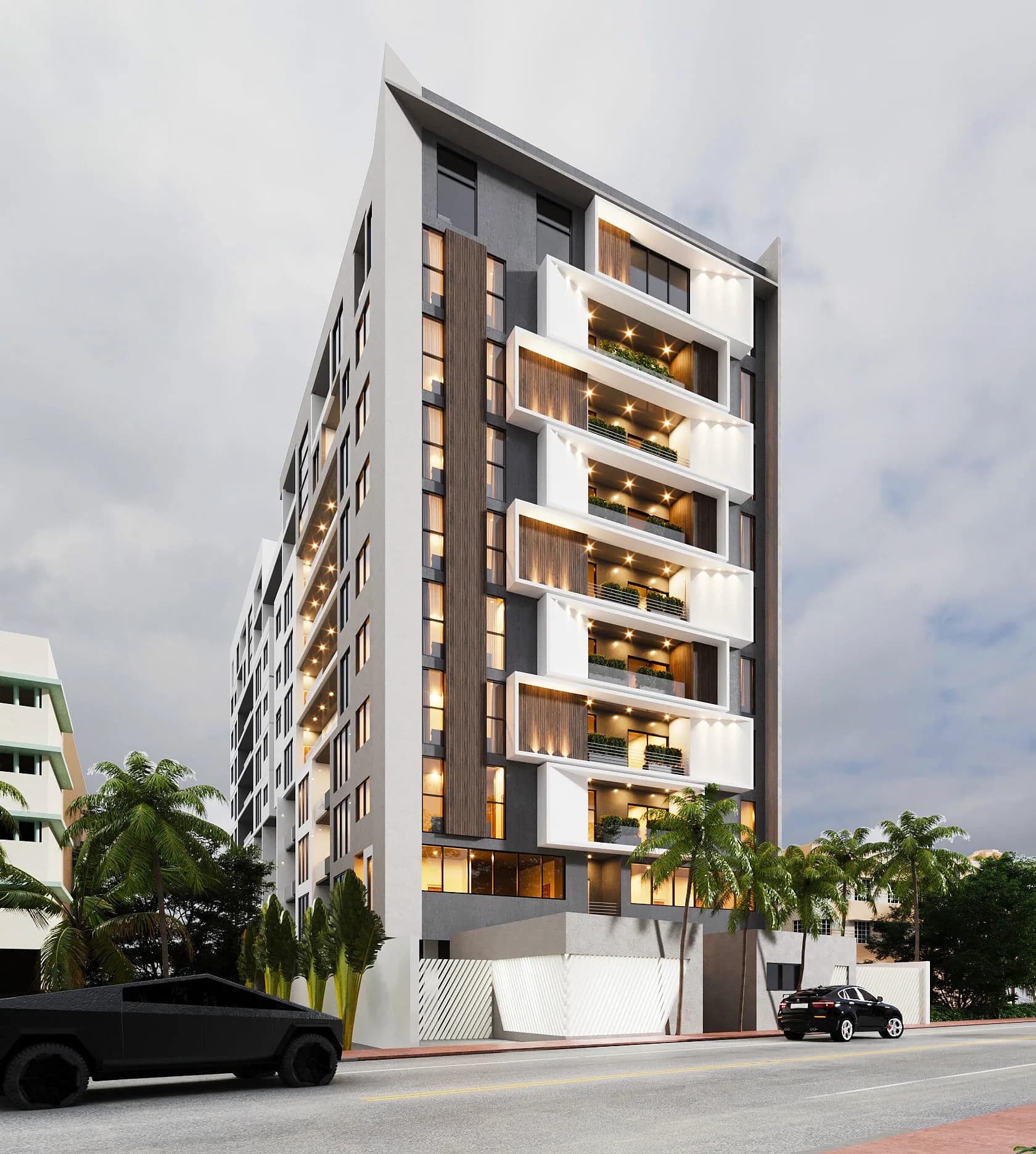
Let’s say you’ve purchased an apartment at Fountain Havens Tower on Landbridge Avenue, Oniru-VI, Lagos for ₦300 million and you rent it out upon delivery for ₦18 million a year.
To calculate your gross rental yield, you divide the annual rental income by the purchase price and multiply by 100.
₦18 million ÷ ₦300 million × 100 = 6% gross rental yield per annum.
That means the property generates rental income equivalent to 6% of its purchase price annually, before expenses.
Now, here’s where you need to pay attention.
The ₦18 million isn’t necessarily what you get to keep.
There may be service charges, maintenance, repairs, property management fees and periods when the apartment is vacant. Once you account for these expenses, the amount you actually retain will be lower.
Let’s assume those operating expenses total ₦3.5 million annually.
Your net operating income becomes ₦14.5 million, giving you a net yield of approximately 4.83% per annum on the ₦300 million purchase price.
That is a more useful starting point when assessing the income potential of the property.
And this is why I always encourage investors to look beyond the headline figures. A property can sound impressive on paper, but you want to understand what the numbers actually mean for you.
Now, Let’s Talk About Capital Appreciation
Capital appreciation is simply the increase in the value of your property over time.
Let’s use the same ₦300 million apartment at Fountain Havens Tower on Landbridge Avenue, Oniru-VI.
Imagine that, after a few years, its market value rises to ₦390 million.
Your property has appreciated by ₦90 million, representing a 30% increase in value from your original purchase price.
That sounds great, doesn’t it?
But here’s the important distinction: an increase in property value is not the same as money you have received.
Until you sell the property, that gain is generally unrealised. And when you eventually sell, your actual profit will depend on factors such as transaction costs, applicable taxes and the amount you originally spent acquiring the property.
So, what makes a property appreciate?
Several things can contribute, including its location, infrastructure, demand in the surrounding area, the quality in the maintenance of the development, the supply of competing properties and broader economic conditions.
Sometimes, a neighbourhood becomes more desirable as infrastructure and commercial activity develop. Sometimes, demand for well-designed homes in a particular location increases, and in the case of Landbridge Avenue, its proximity to VI, without the cost of VI, is actually increasing demand, which in turn can increase prices. These factors can support property values, although none guarantees that prices will rise.
My point is that buying property is not just about what it costs today. It’s also about understanding the factors that could influence its value in the years ahead.
So, Which One Matters More?
Honestly, it depends on what you want your money to do for you.
And I think this is where many investors need to pause and ask themselves a more important question: What am I actually trying to achieve with this investment?
If you want regular income, pay close attention to rental yield.
Perhaps you’re a business owner looking to diversify your income. Maybe you’re building a property portfolio that you eventually want to use to supplement your earnings.
In that case, the rental income a property can realistically generate deserves serious attention.
You want to understand the rental demand in that location, what tenants are willing to pay, how much it costs to maintain the property and how consistently you can expect it to be occupied.
A property that generates good net rental income can be useful for investors who value recurring cash flow.
But remember, rental income is not guaranteed. Tenants may leave, payments may be delayed, and maintenance expenses can change.
That’s why the question isn’t simply, “How much rent can I charge?”
It’s, “How much income can this property realistically generate after expenses, and how sustainable is that income?”
If you’re thinking long-term, capital appreciation deserves attention too.
Perhaps you don’t need the rental income immediately. Your priority is acquiring assets that could become more valuable over the next five, ten or fifteen years.
You may be more interested in the fundamentals of the location, the quality of the development, the surrounding infrastructure, the property’s potential appeal to future buyers and even the future upcoming developments and government masterplans for that location. A good example is the Lagos Arena that is being quietly built behind Landbridge Avenue. An investment in that location would significantly appreciate over the years because of this one factor, in addition to many other value-driving factors.
In this case, capital appreciation may play a bigger role in your decision.
However, I would be careful about buying a property simply because someone says its value will double in a few years.
Projections are not promises. A premium address doesn’t automatically guarantee appreciation, and the market may not perform as expected.
Look at the evidence, understand the assumptions and make sure the investment still makes sense without relying on an overly optimistic forecast.
And if you want both?
Then you need to evaluate both.
There is nothing wrong with wanting a property that generates rental income today while offering the potential for long-term value growth.
In fact, that is exactly what you should be looking for.
The challenge usually is finding a property whose price, location, rental prospects, quality and associated costs make sense for your objectives.
Sometimes investors may have to make trade-offs. A property with stronger rental income may have different growth prospects from one in a location where you expect demand to increase over time.
Neither is automatically better. What matters is understanding what you’re buying and why.
Continue reading: Part two, “Putting the Numbers to Work” compares two ₦300 million properties side by side, sets out the five questions to answer before buying, and what all of this means for premium property in Lagos.
Disclaimer: This article is for educational purposes only and does not constitute financial, legal or tax advice. Property values, rental income and investment returns are not guaranteed. Figures used in the examples are hypothetical and do not represent the actual performance or projected returns of any Fountain Havens development. Investors should conduct independent due diligence and seek appropriate professional advice before investing.